Biophysical characterization
We help answer practical questions about your protein: its stability, oligomeric state, secondary structure, and binding interactions, using a range of biophysical methods. You can request full-service support, and for most of our instruments we also offer training and independent access.
Common questions:
• Is my protein aggregating or forming oligomers? What is its molecular weight?
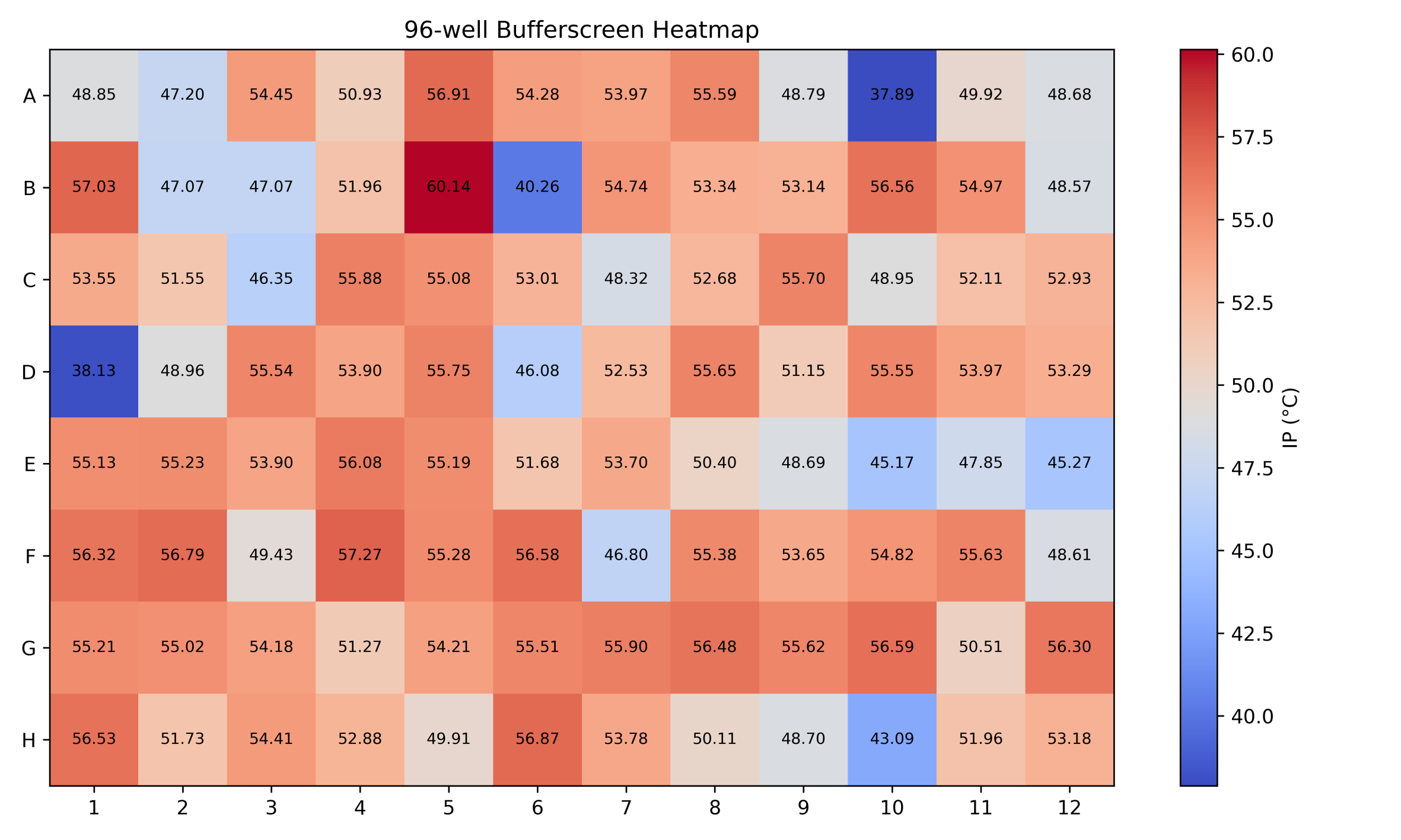
• Is my protein stable in my assay conditions? Storage buffer/formulation screen?
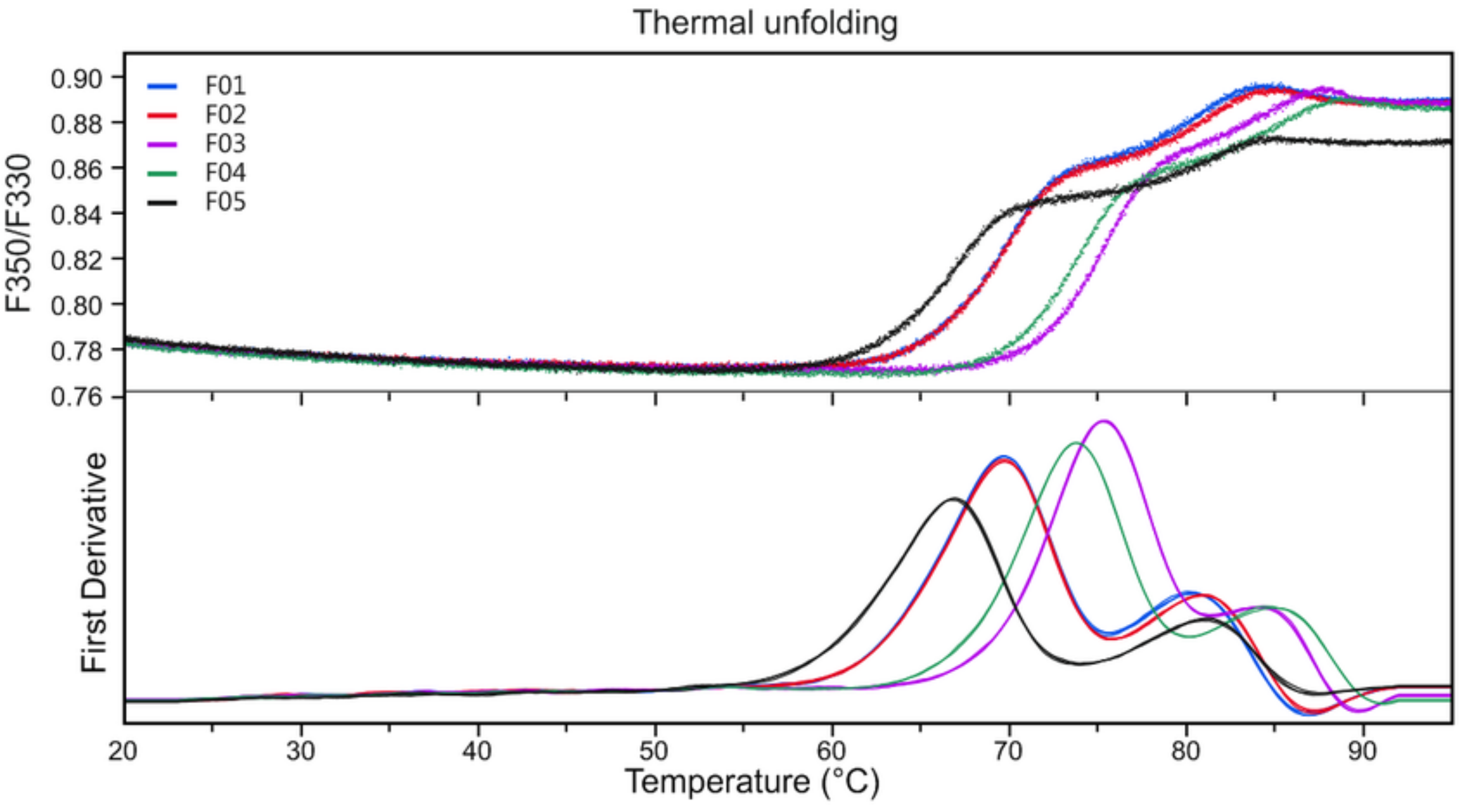
• Do buffer conditions, pH, salt, or additives affect thermal stability or aggregation?
• Is the protein folded; what is the secondary structure content?
• Does my protein bind a partner/ligand, and if so, how strongly?
• How do different constructs or mutants compare?
• What is the macromolecular composition of my sample?
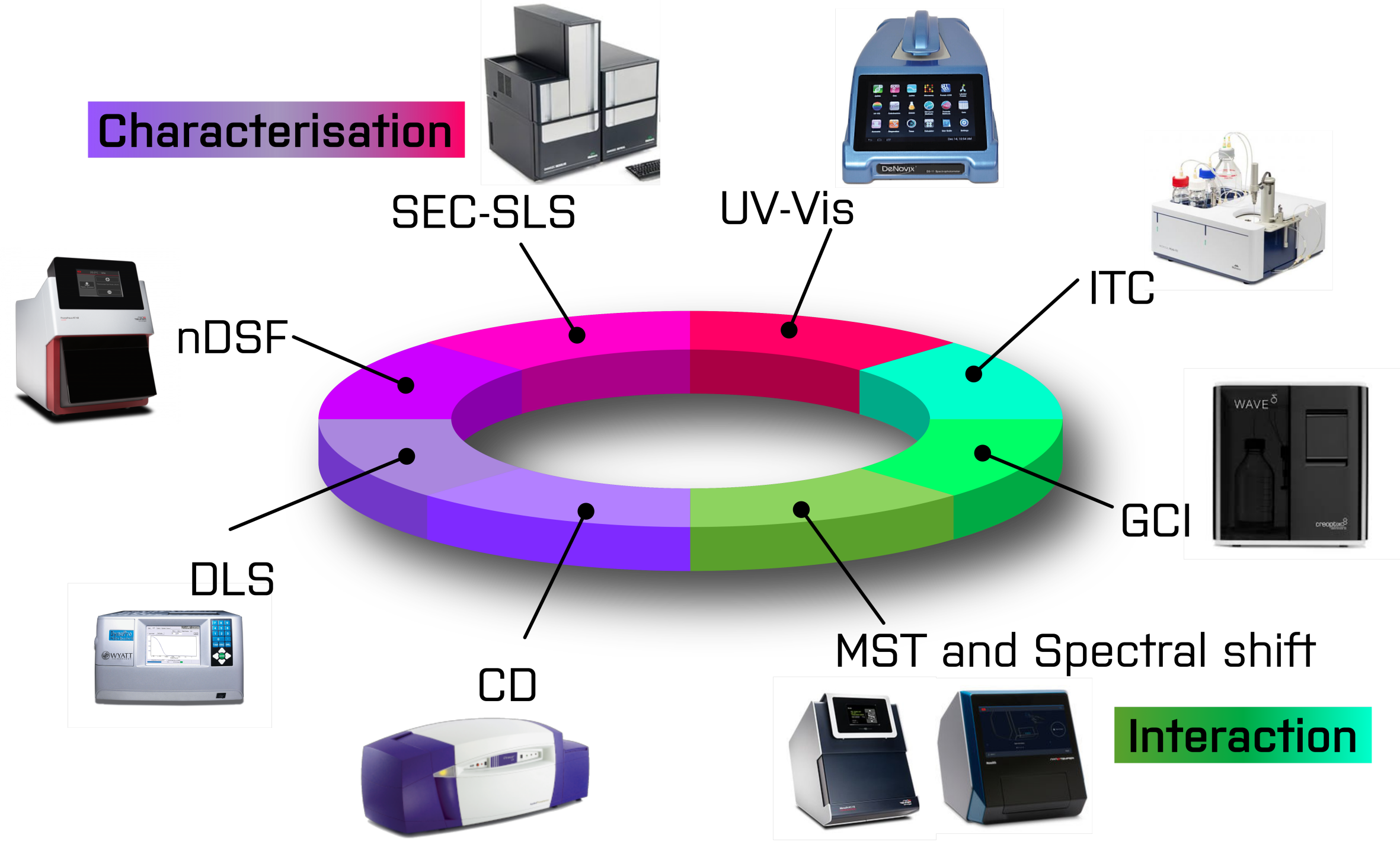
In-house techniques and instruments:
Characterization
Biomolecular interactions
For a detailed list of available instruments, please see the equipment page.
Training and instrument access:
We also provide instrument training and access for most of these methods. Once access is approved, VBCF ProTech users may book an instrument using our online booking system. If you require staff support during your measurement, please confirm availability in advance.
For registered users, further information on data analysis, literature, and online platforms can be found on the resources page (login required).
Data analysis (on-site):
Users have access to a dedicated Data Analysis PC on premises with software associated with our instruments, including:
• Chirascan and Global3 (CD data analysis)
• Dynamics (DLS data analysis)
• MicroCal PEAQ-ITC analysis and MicroCal concat software (ITC data analysis)
• MO.Affinity and PALMIST (MST data analysis)
• Creoptix WAVEcontrol (GCI data analysis)
• GraphPad Prism (plotting and overall analysis)
• NITPIC, Sedfit, Sedphat, and Sednterp (ITC analysis and general biophysical queries, e.g. global fitting, extinction coefficients, and dn/dc)